
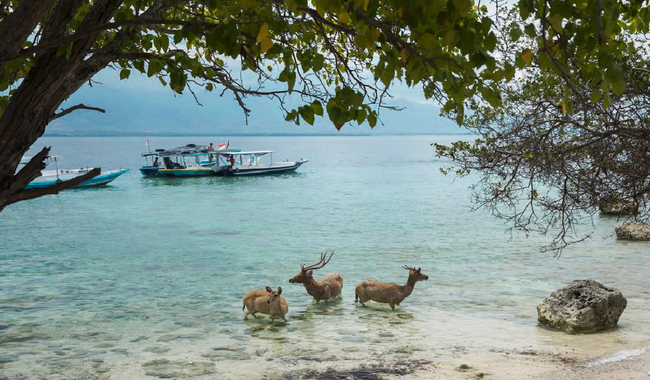
Apart from functioning as a conservation area, West Bali National Park can also be an educational nature destination for tourists. When visiting, tourists have the opportunity to do various engaging activities. Starting from trekking to snorkelling.
Not inferior to Bromo Tengger Semeru and Meru Betiri National Park, the national park located in the West Bali area also offers a myriad of beauty, from forest areas to coral reefs.
Overview of West Bali National Park
As the name implies, this national park is in the western part of the Island of the Gods. It covers an area of 77,000 hectares, which is equivalent to 10% of the island’s land area.
This national park is also a breeding ground for rare animals, including deer, banteng, kalong, and birds. The centre of the national park in West Bali is dominated by the remains of four Pleistocene-age volcanoes.
History Of West Bali National park

Before officially becoming the West Bali National Park, the area had already been designated as a national park candidate through a declaration from the Ministry of Agriculture Number. The event took place on 14 October 1982.
Meanwhile, it was established as a national park on 15 September 1995. The Ministry of Forestry of the Republic of Indonesia determined the inauguration. At that time, the national park area had a diverse habitat.
Location
West Bali National Park is in Jembrana Regency and Buleleng Regency, still Indonesia. Many villages surround this national park. These include Sumber Klampok, Gilimanuk, and Banyuwedang.
It takes about 3 to 4 hours to reach the national park from Denpasar or Singaraja. This tourist destination is ideal for those who love nature and ecotourism.
Topography
Bali Barat National Park has a flat and slightly steep sloping topography. This area is from 0 to 1,414m above sea level. 4 mountains are included in this national park area.
Starting from Mount Prapat Agung, Mount Banyuwedang, Mount Klatakan, and Mount Sangiang. This national park has four islands in its water area: Menjangan Island, Bird Island, Gadung Island, and Kalong Island.
Entrance Ticket and Opening Hours
The West Bali National Park entrance ticket is still relatively affordable for foreign tourists. To enter this destination, tourists from abroad, the entrance ticket is priced at US$12.3 (about IDR 200,000) for weekdays and US$18,4 (about IDR 300,000) for weekdays or holidays.
Parking rates are also relatively affordable; car parking charges IDR 5,000 and IDR 2,000 for motorbikes. The national park is open every day from 08.00 to 17.000 local time.
Attractiveness

One of the characteristics of West Bali National Park is the Bali Starling. This national park also has many other attractions. The following explains a series of attractions in the West Bali area.
1. Habitat of Leucopsar Rothschildi
The Leucopsar Rothschildi (Bali Starling/Bali Myna/Jalak Bali/Bali Mynah) is a protected animal in the West Bali National Park. This rare endemic bird has become a conservation symbol on Bali island. Interestingly, the Bali Starling can only be found in this national park.
The Bali Starling is on the verge of extinction due to poaching activities and habitat destruction. The distinctive features of this bird can be seen from its clean feathers, black tail wing tips, and bright blue eyes.
The National Park in this island is the leading conservation centre for the Bali Starling. There are several rigorous captive breeding and release programmes in place. Visiting tourists have the opportunity to see the Bali Starling.
2. Underwater Beauty At West Bali National Park
In addition to offering stunning landscapes, the national park located in West Bali also boasts incredible underwater beauty. One of them is the Menjangan Island area.
This island is popular as the best diving and snorkelling spot in Bali. The water is evidently clear, and many coral reefs are still preserved. The underwater landscape is perfect for tourists who love underwater diving activities.
The current is calm, making Menjangan Island ideal for beginners who want to snorkel or dive. The island’s ecosystem includes various fish species, colourful corals, and marine life.
3. Diverse Ecosystems
As a conservation site for flora and fauna, it’s no surprise that this national park area has a diverse ecosystem. The area consists of several types of vegetation. These include mangrove forests, coastal forests, savannahs, coral, sandy beaches, and seagrass beds.
This combination of ecosystems makes the area in the West Bali region a myriad of natural beauty. Its 190 square kilometres are home to various types of unique flora and fauna.
This national park, with both terrestrial and aquatic ecosystems, is a miniature representation of Indonesia’s biodiversity. Each zone has different ecological characteristics.
4. Tropical Forest Trekking Trail
The national park area in West Bali offers a challenging trekking experience for tourists. While trekking, tourists can enjoy the beauty of the flora of nature.
Trekking trails are scattered throughout tropical forest areas, savannahs, and mountains. Several trails have different difficulty levels, so tourists can try relatively light tracks for beginners.
While for experienced nature lovers, you can try challenging trekking trails. That way, tourists can feel the sensation of exploring the wild with lush forest views that refresh the mind.
5. Educational Tourism At West Bali National Park
Not only serves as a tourist destination, this area is also an ideal area for students, researchers, and tourists who want to learn about the balance of nature, especially tropical ecosystems and animal conservation.
This educational activity emphasises theory and provides hands-on experience in the field. Travellers can see conservation areas, learn about tree species, and study wildlife tracks.
Many educational institutions use this national park for field studies. This activity positively impacts the younger generation’s awareness of nature conservation.
Tips to Visit West Bali National Park
Below are some tips for tourists who want to visit this National Park. In addition to paying attention to the clothes and equipment brought, tourists must comply with existing regulations.
1. Comfortable and Lightweight Clothing
When visiting this national park, tourists should wear appropriate and comfortable clothing. Appropriate clothing also makes the tourist experience more memorable.
Wear lightweight clothes that absorb sweat and protect the body from sun exposure and insect bites. Choose long—or short-sleeved shirts made of materials suitable for outdoor activities.
Tourists should wear long pants when trekking to minimise the risk of scratches. They should also wear comfortable, non-slip footwear while visiting this national park.
2. Complete Travelling Equipment
Before visiting, tourists should prepare complete travelling equipment. This is useful to support travellers’ comfort, safety and smooth running while exploring this conservation area.
Use a lightweight backpack to store personal equipment. Travellers can store snacks, drinks, personal medication, and a change of clothes in the bag.
Travellers may bring raincoats and umbrellas as additional equipment, especially when visiting during the rainy season. By bringing raincoats and umbrellas, travellers don’t have to worry about getting caught in the rain.
3. Follow the Rules
As with other Bali tour destinations, this national park in West Bali has strict regulations. These regulations help preserve this national park’s environment, flora, and fauna.
Travellers must keep the national park area clean by disposing of waste appropriately. They are also prohibited from picking plants and disturbing wildlife activities. By complying with these regulations, tourists can show their responsibility.
Plan a Visit ASAP!
This tourist spot is a national park, so visitors should not forget the rules. As long as you follow the rules, you’ll have a great time with the flora and fauna of this national park.
Schedule a visit to West Bali National Park soon! With a diverse ecosystem, it’s no surprise that this national park offers many natural beauty, from savannahs to forests to waters.


